
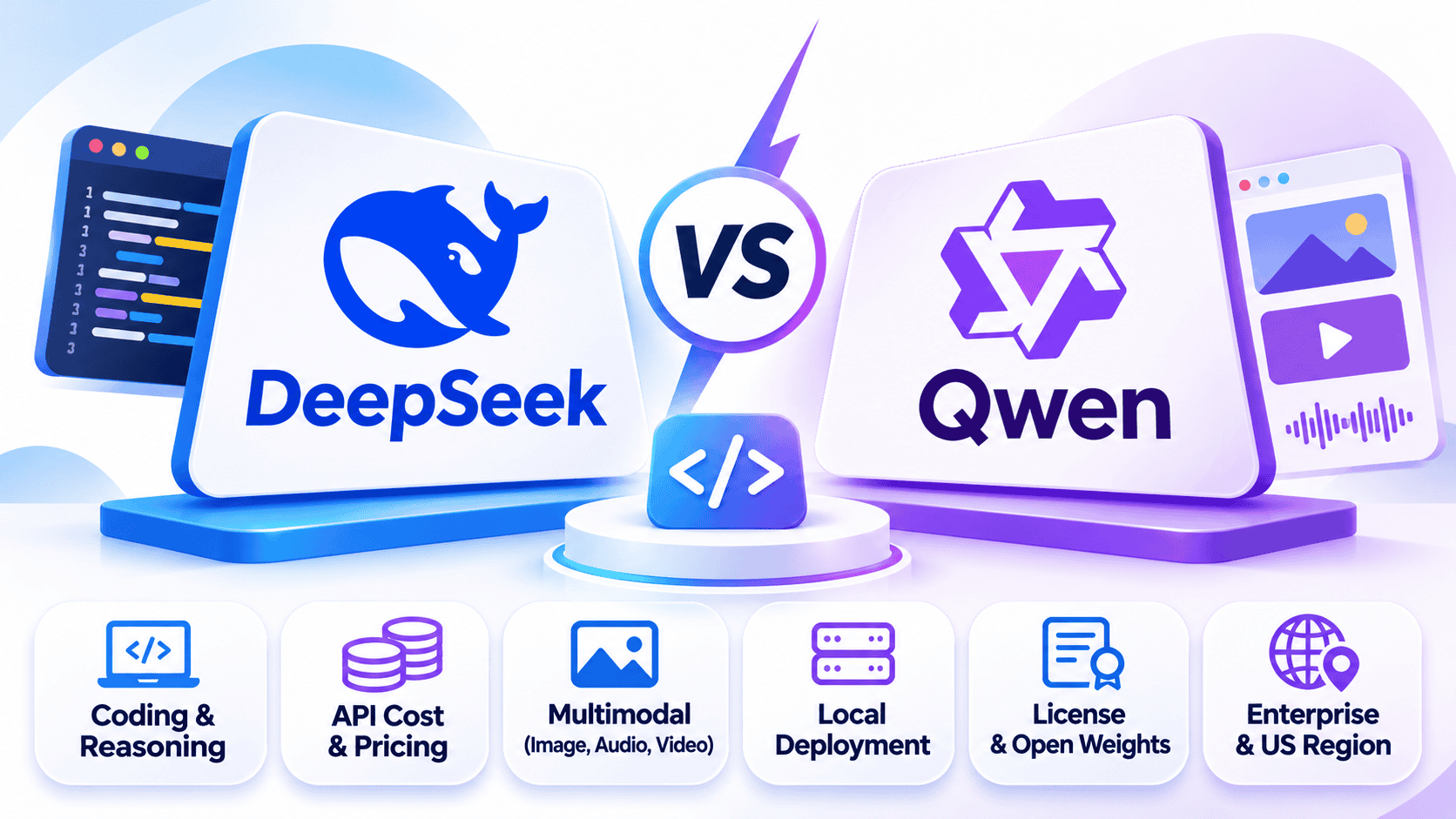

DeepSeek and Qwen are both serious AI ecosystems, but they solve different problems particularly well. DeepSeek is usually the stronger choice when you want high reasoning and coding capability per dollar, very long generated outputs, straightforward API compatibility, or current flagship weights under the MIT License. Qwen is usually the stronger choice when you want a feature-rich free assistant, broader multimodal support, more practical model sizes for local deployment, or enterprise API options with US regional processing and zero-data-retention controls.
The answer changes by product. Qwen3.8 Flash has a slightly lower published US API price than DeepSeek V4.1 Flash for a typical uncached request, while DeepSeek V4.1 Flash offers a much less expensive alternative to Qwen3.8 Max for many demanding workloads. Qwen also provides smaller downloadable models that are far more realistic for a workstation than either company’s largest open-weight model.
Published: November 5, 2026. Model availability, API prices, regional endpoints, licenses, and policies can change.
Quick recommendation: Choose DeepSeek for cost-efficient coding, reasoning, long-form generation, and permissively licensed flagship weights. Choose Qwen for multimodal work, free consumer features, smaller local models, regional cloud deployment, and a wider family of specialized models. Benchmark both before selecting one for production.
DeepSeek vs Qwen at a glance
| Priority | Better fit | Why |
|---|---|---|
| Feature-rich free AI assistant | Qwen | Qwen Studio combines search, deep research, documents, audio, images, video, media generation, and web-app creation in one free consumer product. |
| Focused free chat for text and code | DeepSeek | The DeepSeek app provides free access to its current flagship model through a simpler chat-focused experience. |
| Lowest published US API token rate | Qwen3.8 Flash | Its US deployment price is $0.15 per million input tokens and $0.47 per million output tokens. |
| High-end performance per dollar | DeepSeek V4.1 Flash | Independent testing places it close to Qwen3.8 Max on overall capability while DeepSeek’s published token prices are much lower. |
| Coding and AI agents | Depends | DeepSeek emphasizes low cost, long output, and compatible APIs. Qwen adds native video understanding, Qwen Code, and a broader model ecosystem. |
| Images, audio, and video | Qwen | Qwen’s consumer and specialized model families cover more input and output modalities. |
| Local use on attainable hardware | Qwen | Qwen provides smaller checkpoints, including a current 27B multimodal model, while DeepSeek’s current flagship weights are much larger. |
| Permissive license for a current flagship | DeepSeek | DeepSeek V4.1 Flash weights use the MIT License. Qwen licenses vary by checkpoint. |
| Maximum first-party API output | DeepSeek | DeepSeek documents up to 393,216 output tokens, compared with 131,072 for Qwen3.8 Max and Flash. |
| US regional API and enterprise ZDR | Qwen | Alibaba Cloud Model Studio offers a US deployment scope and an enterprise zero-data-retention option for supported models. |
| Federal civilian government systems | Qwen or another approved provider | A 2026 federal order excludes DeepSeek products and implementations from covered federal civilian systems and procurements. |
What is actually being compared?
“DeepSeek” and “Qwen” do not each describe one fixed model. Both names can refer to consumer assistants, hosted APIs, downloadable weights, specialized models, and third-party deployments. A fair comparison must separate those layers.
| Comparison layer | DeepSeek | Qwen |
|---|---|---|
| Consumer assistant | DeepSeek web and mobile app, currently powered by DeepSeek V4.1 Flash-1017 | Qwen Studio, a free assistant that routes tasks across Qwen models and specialized capabilities |
| Economical hosted API | deepseek-flash | qwen3.8-flash |
| Higher-end hosted API | deepseek-v4-pro or the highly capable deepseek-flash | qwen3.8-max |
| Current open-weight flagship | DeepSeek V4.1 Flash-1017 | Qwen3.8-2.4T-A95B |
| More attainable current open model | No comparable small V4.1 flagship checkpoint | Qwen3.8-27B |
| Specialized ecosystem | General reasoning, coding, vision, search, and distilled reasoning models | General, coding, vision-language, omni-modal, audio, image, video, embedding, and reranking models |
DeepSeek’s October 17, 2026 changelog states that its web and mobile apps use DeepSeek V4.1 Flash-1017. The same model is available through the deepseek-flash API identifier.
Qwen Studio is a product layer rather than a permanent one-model interface. Its hosted developer options also differ from its downloadable weights. For example, Qwen3.8 Max is based on Qwen3.8-2.4T-A95B, but the hosted Max service adds features such as visual input, non-thinking mode, a one-million-token default context, and managed tools. The two should not be treated as identical.
Which provides the better free AI assistant?
Qwen Studio offers the broader feature set
Qwen Studio is free to use and combines several functions that would otherwise require separate tools. Its official product page lists:
- Thinking and complex problem-solving
- Real-time web search
- Multi-step Deep Research
- Uploads of spreadsheets, text files, and long documents
- Processing of audio, images, and video
- Image and video generation
- Website and HTML artifact creation
- Voice and photo features on mobile
- Desktop apps for macOS and Windows
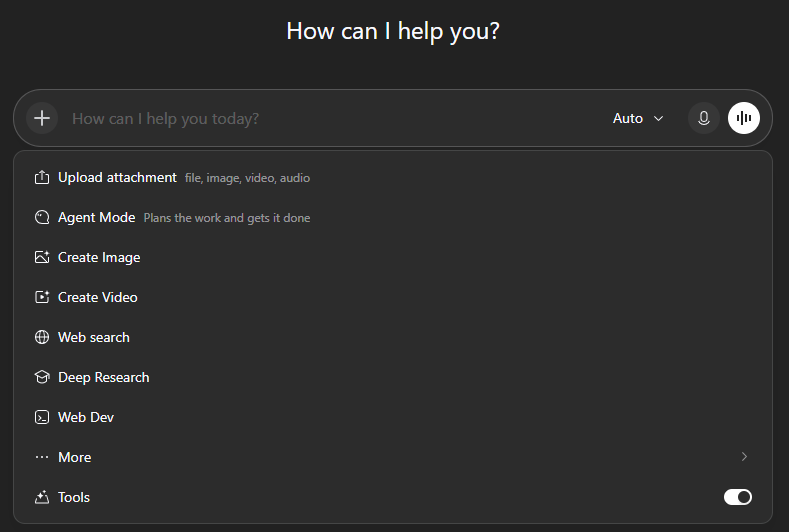
Qwen Studio is therefore the better free consumer product for a reader who wants one interface for research, mixed-media files, content creation, and lightweight app building.
DeepSeek provides a more focused experience
The DeepSeek app also provides free access to its current flagship model. It is strongest as a direct assistant for text, reasoning, coding, images, and web-assisted answers. DeepSeek additionally offers Harness for macOS and Windows, which can work with local files and continue longer tasks in the background.
DeepSeek is the better fit when you want a straightforward assistant centered on analysis and code rather than a large collection of consumer media features. Qwen is the better fit when your work regularly crosses between documents, audio, video, research, images, and interactive artifacts.
DeepSeek vs Qwen for coding and AI agents
Coding is the closest part of this comparison. Neither company wins every type of software task, and a model that performs well on isolated code generation may still struggle with repository navigation, terminal use, testing, or long agent loops.
What independent testing shows
An Artificial Analysis comparison reviewed on November 6, 2026 gave DeepSeek V4.1 Flash-1017 a score of 33 and Qwen3.8 Max-0902 a score of 34 on its Intelligence Index v5.0.1. A one-point composite difference does not establish a meaningful universal winner.
The individual evaluations were divided. DeepSeek led that comparison on AutomationBench and FrontierCode, while Qwen led on Terminal-Bench, AA-Briefcase, and several knowledge or document-oriented tests. This is more useful than a single winner label: the models respond differently to coding agents, terminal tasks, professional deliverables, and knowledge-heavy work.
The same comparison measured lower cost per task and faster output for DeepSeek in its test configuration. Those operational results are important, but they depend on the selected inference provider, routing, reasoning settings, and test workload. They should not be treated as guaranteed production latency.
Where DeepSeek has an advantage
- Long generated outputs: DeepSeek documents a maximum output of 393,216 tokens, which can help with large code transformations and extended agent traces.
- API compatibility: DeepSeek provides both OpenAI-format and Anthropic-format endpoints.
- Developer features: Its current APIs support JSON output, tool calls, the Responses API, prefix completion, and fill-in-the-middle completion.
- Cost: DeepSeek V4.1 Flash is dramatically less expensive than Qwen3.8 Max at published first-party prices.
- Open flagship weights: V4.1 Flash weights are available under the MIT License.
Where Qwen has an advantage
- Visual coding context: Qwen3.8 Max and Flash accept text, images, and video, which can help with interface recordings, design references, diagrams, and visual debugging.
- Model choice: Teams can route simple tasks to Qwen3.8 Flash, difficult tasks to Max, and local tasks to smaller open checkpoints.
- Qwen Code: Qwen provides an open-source terminal agent designed for understanding codebases and automating development work.
- Cloud controls: Alibaba Cloud Model Studio includes regional deployment, caching, monitoring, and enterprise data-retention options.
- Local experimentation: Qwen provides more realistic model sizes for individual developers and smaller infrastructure teams.
For production coding, test both on your own repositories. A useful evaluation set should include bug fixes, multi-file edits, test generation, terminal commands, dependency changes, structured output, and recovery from failed tool calls. Measure passing tests, human correction time, retries, latency, and total cost per successful task.
Which is better for reasoning and research?
Neither brand has a permanent reasoning advantage. Independent testing places the current high-end options close overall, with different strengths across tasks. The more practical distinction is how each model obtains information and turns it into a usable deliverable.
Qwen is stronger as a ready-made research product
Qwen Studio includes web search and Deep Research, allowing a user to request a multi-step report without building a retrieval system. It can also combine web material with spreadsheets, documents, audio, images, and videos. That makes it particularly useful for analysts, students, marketers, and researchers who need to work across several media formats.
The developer experience requires more attention to region and deployment scope. Alibaba’s current documentation marks built-in web search as unsupported for the US deployment scope of Qwen3.8 Max and Flash, even though it is supported in some international configurations. A US-hosted application may therefore need a separate search or retrieval service.
DeepSeek offers a modular search workflow
DeepSeek provides web search in its consumer product and separate Search and Fetch APIs for developers. Search returns structured results, while Fetch retrieves page content. This gives developers more control over ranking, source selection, citation handling, and downstream prompting.
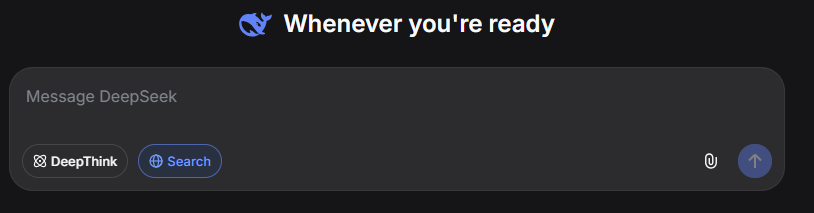
The trade-off is implementation work. A custom research system must handle weak sources, duplicate pages, failed fetches, changing content, and citation accuracy. A retrieved link does not prove that a model interpreted the source correctly, so important conclusions still require human verification.
Qwen has the broader multimodal ecosystem
DeepSeek V4.1 Flash supports text and image input with text output. That is sufficient for screenshots, charts, scanned pages, photographs, user interfaces, and many document-analysis tasks.
Qwen3.8 Max and Qwen3.8 Flash support text, images, and video as model inputs. The broader Qwen ecosystem also includes audio, speech recognition, text-to-speech, omni-modal interaction, image generation, video generation, embeddings, and reranking. Qwen Studio exposes many of these capabilities through one consumer interface.
Choose Qwen when audio or video is a regular part of the workflow, or when an application needs several specialized media models from the same ecosystem. Choose DeepSeek when the workload is primarily text, code, screenshots, charts, and still images.
API pricing for US developers
The table below uses list prices checked on November 6, 2026. Qwen prices use the US deployment scope in the US (Virginia) region. DeepSeek prices use its first-party API and vary between peak and off-peak hours. Promotions, taxes, external tools, storage, third-party markups, and reserved capacity are excluded.
| Model and condition | Input per 1M tokens | Output per 1M tokens | Cached input |
|---|---|---|---|
| Qwen3.8 Flash, US scope | $0.15 | $0.47 | $0.016 implicit cache |
| DeepSeek V4.1 Flash, off-peak | $0.15 | $0.60 | $0.003 cache hit |
| DeepSeek V4.1 Flash, peak | $0.30 | $1.20 | $0.006 cache hit |
| DeepSeek V4 Pro, off-peak | $0.66 | $1.98 | $0.022 cache hit |
| DeepSeek V4 Pro, peak | $1.32 | $3.96 | $0.044 cache hit |
| Qwen3.8 Max, US scope | $2.00 | $6.00 | $0.25 implicit cache |
DeepSeek defines peak hours as 01:00–04:00 UTC and 06:00–10:00 UTC, Monday through Friday, excluding Chinese public holidays. Other periods use off-peak rates. Qwen pricing changes by region and deployment scope; a global deployment in the US region has lower list prices than the US-only scope, but it is not the same data-routing choice.
A transparent cost example
Assume a workload uses 1 million uncached input tokens and 250,000 output tokens, with no search, tools, or storage charges. The formula is one input unit plus 0.25 of the output rate.
- Qwen3.8 Flash, US scope: $0.15 + (0.25 × $0.47) = approximately $0.27.
- DeepSeek V4.1 Flash, off-peak: $0.15 + (0.25 × $0.60) = $0.30.
- DeepSeek V4.1 Flash, peak: $0.30 + (0.25 × $1.20) = $0.60.
- DeepSeek V4 Pro, off-peak: $0.66 + (0.25 × $1.98) = approximately $1.16.
- Qwen3.8 Max, US scope: $2.00 + (0.25 × $6.00) = $3.50.
Qwen3.8 Flash therefore has the lowest raw US-scope cost in this example. DeepSeek V4.1 Flash remains much less expensive than Qwen3.8 Max and may deliver a better quality-to-cost ratio for difficult coding and reasoning tasks.
Token prices do not reveal the full operating cost. A cheaper model can become more expensive if it requires more retries, produces unnecessary reasoning tokens, fails tool calls, or needs more engineering supervision. DeepSeek also charges $0.75 per 1,000 successful Search requests and $0.75 per 1,000 successful Fetch requests. A fair production test should measure cost per accepted result rather than cost per token alone.
Context windows and maximum output
| Model or service | Documented context | Documented maximum output |
|---|---|---|
| DeepSeek V4.1 Flash API | 1 million tokens | 393,216 tokens |
| DeepSeek V4 Pro API | 1 million tokens | 393,216 tokens |
| Qwen3.8 Flash API | 1 million tokens | 131,072 tokens |
| Qwen3.8 Max API | 1 million tokens | 131,072 tokens |
| Qwen3.8-27B open weights | 262,144 tokens natively; extensible toward 1 million with scaling | Configuration-dependent; Qwen recommends up to 131,072 for the final response in supported long-context setups |
| Qwen3.8-2.4T-A95B open weights | 262,144 tokens natively; extensible to approximately 1.01 million | Configuration-dependent; separate reasoning and final-answer budgets may be used |
DeepSeek has the clearer advantage when an application needs exceptionally long generated answers or code. Qwen’s one-million-token hosted context is competitive for large input collections, while its open checkpoints require additional configuration when moving beyond their native 262,144-token context.
An advertised context window is not a guarantee that every token will be used reliably. Long prompts increase latency, memory use, and cost, and models may still overlook details buried in the middle of a document. Test retrieval accuracy with representative files instead of selecting a model solely because its maximum number is larger.
Which is easier to run locally?
Qwen is the practical winner for most local users because it offers a wider range of model sizes. DeepSeek’s current flagship weights are open, but the flagship itself is extremely large.
| Open-weight option | Scale | License | Practical role |
|---|---|---|---|
| DeepSeek V4.1 Flash-1017 | 763 billion parameters | MIT | Datacenter-scale deployment for teams with substantial accelerator infrastructure |
| Qwen3.8-2.4T-A95B | 2.4 trillion total parameters; 95 billion active per token | Custom Qwen3.8-Max license | Large distributed deployments; not a normal desktop model |
| Qwen3.8-27B | 27 billion dense parameters | Apache 2.0 | More attainable workstation, multi-GPU, cloud-GPU, or quantized local deployment |
| DeepSeek-R1-Distill-Qwen models | 1.5B, 7B, 14B, and 32B Qwen-based variants | Check the exact derivative and base-model terms | Older, smaller reasoning experiments; not current DeepSeek or Qwen flagship models |
Qwen3.8-27B is substantially easier to deploy than either full flagship, but “27B” does not mean it will automatically fit or run well on every laptop. Memory requirements change with precision, quantization, context length, KV cache, batch size, offloading, and concurrent users.
Before downloading any large model, define:
- The exact checkpoint and model generation
- The precision or quantization format
- Available GPU memory, system RAM, or unified memory
- Required context length
- Expected number of simultaneous users
- Target tokens per second
- The serving runtime, such as Transformers, vLLM, or SGLang
- Whether image or video input is required
- The model’s exact license and redistribution terms
Do not confuse active parameters with download size. Qwen3.8-2.4T-A95B activates 95 billion parameters per token, but the checkpoint still contains 2.4 trillion total parameters. Sparse activation reduces computation; it does not turn the full model into a 95B download.
Are DeepSeek and Qwen open source?
“Open weight” is the safer description. Both companies publish model weights, but the license and available components differ by checkpoint.
- DeepSeek V4.1 Flash-1017: The official repository and weights use the MIT License.
- Qwen3.8-27B: The official model card lists the Apache 2.0 License.
- Qwen3.8-2.4T-A95B: The model uses the custom Qwen3.8-Max license rather than Apache 2.0.
- Hosted APIs: Access is governed by the provider’s service terms, not merely the downloadable checkpoint’s license.
- Fine-tunes and quantizations: A derivative can introduce additional terms or obligations, so verify the exact artifact rather than relying on the family name.
DeepSeek has the simpler licensing story for its current flagship because the V4.1 Flash weights are MIT-licensed. Qwen offers more model-size choice, but the license must be checked individually. Organizations planning commercial redistribution, embedded deployment, or model modification should review the exact license with qualified counsel.
Privacy and enterprise data handling
Privacy depends on the product and deployment method. Consumer chat, a cloud API, a third-party host, and a self-hosted checkpoint should not be treated as if they have the same data practices.
DeepSeek consumer services
DeepSeek’s privacy policy says its consumer services may collect prompts, uploaded files, photographs, voice input, chat history, account information, device data, logs, and approximate location. The policy permits data to be used to develop and improve its services and models, while also listing a right to opt out of model-training or technology-optimization use.
The policy states that DeepSeek directly collects, processes, and stores personal data in the People’s Republic of China. It generally retains account and input data while an account remains active and may retain information longer for legal, security, or business purposes.
DeepSeek also states that this consumer privacy policy does not automatically govern downstream applications created by developers through its open platform. The operator of a third-party application must provide its own privacy disclosure. That means an API-based product must be evaluated through both DeepSeek’s applicable service terms and the application developer’s policy.
Qwen Studio and Alibaba Cloud Model Studio
Qwen’s training-data summary says user interactions may sometimes be used to improve its services and that users can request to opt out of having their content used for training. That statement applies to qwen.ai consumer services and should not be treated as the policy for every Alibaba Cloud enterprise deployment.
Alibaba Cloud Model Studio publishes a more specific API retention policy. By default, prompts and responses from model inference calls are retained for no longer than 30 days unless longer retention is legally required or reasonably necessary for service security. Stateful files and conversations remain until the user deletes them.
Eligible enterprise customers can apply for Zero Data Retention in non-mainland regions including US (Virginia). For supported models and calls, prompts and responses are not written to durable storage. They can pass through an encrypted transient cache for up to 24 hours and are not used for model training or human review during that period. Qwen3.8 Max and Qwen3.8 Flash are among the supported model series.
Self-hosting increases control, but not automatically
A self-hosted DeepSeek or Qwen checkpoint can keep prompts inside infrastructure you control. Privacy still depends on logging, backups, access permissions, telemetry, monitoring tools, connected search services, network security, and employee practices. A local model that sends prompts to an external tool is not a fully local workflow.
- Do not put passwords, private keys, unreleased code, health records, legal files, or regulated customer data into a consumer chatbot.
- Use a contractually approved enterprise API or controlled self-hosted deployment for confidential workloads.
- Verify retention, training use, processing region, subprocessors, and incident-response terms before production use.
- Recheck policies after major product or account changes.
Does US policy affect the choice?
Yes, for some government and contractor environments. A Federal Register notice published October 20, 2026 describes an order excluding DeepSeek products and services from covered federal civilian agency procurements. It also orders the removal of DeepSeek, affiliated products, and third-party products or services developed using DeepSeek implementations from covered federal civilian executive branch IT systems, subject to an exception process.
This is not the same as a nationwide consumer ban. Private individuals and ordinary businesses are not automatically prohibited from using DeepSeek by that order. Federal contractors, vendors serving civilian agencies, state organizations, schools, and employers should check the rules that apply to their systems and contracts.
For a covered federal civilian workflow, Qwen is not automatically approved merely because DeepSeek is excluded. The organization must still complete its own procurement, security, privacy, and supply-chain review.
Who should choose DeepSeek?
- You need strong coding or reasoning without paying flagship Qwen Max rates.
- You expect very long generated answers, code, or agent traces.
- You want both OpenAI-compatible and Anthropic-compatible first-party API access.
- You need JSON output, tool calling, prefix completion, or fill-in-the-middle completion.
- You prefer MIT-licensed weights for a current flagship model.
- Your local infrastructure can handle a very large checkpoint, or you plan to use the hosted API.
- Your workload is primarily text, code, images, screenshots, and web retrieval rather than audio or video.
Who should choose Qwen?
- You want a free assistant with search, Deep Research, audio, video, files, and media generation.
- You need native video understanding in a hosted general-purpose model.
- You want a broader range of model sizes for local or private deployment.
- You need a current 27B multimodal checkpoint rather than a datacenter-scale flagship.
- You want to route workloads among Flash, Max, coding, audio, vision, embedding, and other specialized models.
- You require a US cloud deployment scope or eligible enterprise zero-data-retention controls.
- You want Qwen Code or a wider Alibaba cloud and agent ecosystem.
When should you benchmark or use both?
Benchmark both when small quality differences could affect revenue, safety, engineering time, or customer experience. Use the exact models, endpoints, regions, and settings planned for production rather than comparing anonymous chatbot responses.
- Create 20 to 50 representative tasks from your real workflow.
- Use the same source material and success criteria.
- Run multiple trials for tasks with variable outputs.
- Measure factual accuracy, passing tests, tool reliability, retries, latency, and human editing time.
- Record input, reasoning, and output tokens separately where available.
- Calculate total cost per accepted result.
- Check behavior with long prompts, ambiguous requests, and tool failures.
A mixed architecture may be more efficient than selecting one permanent winner. Qwen3.8 Flash can handle inexpensive multimodal preprocessing, DeepSeek can handle long code or reasoning tasks, and Qwen Max can be reserved for cases where its broader agent and professional-work capabilities justify the premium. Routing also reduces dependence on one provider.
Final verdict: DeepSeek or Qwen?
Choose DeepSeek when capability per dollar, coding, long output, compatible APIs, and a permissively licensed current flagship matter most. DeepSeek V4.1 Flash is especially compelling for developers who would otherwise consider a much more expensive flagship API.
Choose Qwen when you need broader multimodality, a more capable free consumer product, practical local model sizes, specialized model families, or enterprise deployment in a defined US region. Qwen3.8 Flash also has the lower published US-scope token price for basic high-volume inference.
There is no universal coding or reasoning winner. The current evidence shows a close high-end contest, while the larger differences come from price, output limits, modalities, hardware requirements, licenses, data controls, and the surrounding product ecosystem.
Frequently asked questions
Is Qwen better than DeepSeek?
Qwen is better for multimodal consumer features, audio and video workflows, smaller local models, specialized model selection, and regional enterprise deployment. DeepSeek is better for long output, high-end price-to-performance, API compatibility, and MIT-licensed flagship weights.
Which is better for coding, DeepSeek or Qwen?
DeepSeek is often the better coding value because of its low token prices, long output limit, and strong results on coding-agent tests. Qwen can be better when coding depends on screenshots, video, Qwen Code, smaller local models, or Alibaba’s managed platform. Test both on your own repository before choosing.
Which API is cheaper?
Qwen3.8 Flash has a slightly lower US deployment output price than DeepSeek V4.1 Flash. DeepSeek V4.1 Flash is far cheaper than Qwen3.8 Max and can provide stronger value for difficult reasoning and coding workloads. DeepSeek pricing also changes between peak and off-peak hours.
Which is easier to run locally?
Qwen is easier for most local users because it provides smaller official checkpoints, including Qwen3.8-27B. DeepSeek’s current V4.1 Flash checkpoint has 763 billion parameters and requires substantial infrastructure. Actual hardware needs depend on quantization, context, runtime, and concurrency.
Are Qwen and DeepSeek open source?
Both publish open weights, but “open source” may be too broad. DeepSeek V4.1 Flash uses the MIT License, Qwen3.8-27B uses Apache 2.0, and Qwen3.8-2.4T-A95B uses a custom Qwen license. Always verify the exact checkpoint and license.
What is DeepSeek-R1-Distill-Qwen?
DeepSeek-R1-Distill-Qwen models are older derivative models built from Qwen2.5 base checkpoints and fine-tuned using data generated by DeepSeek-R1. They combine a Qwen base architecture with DeepSeek reasoning data. They should not be treated as current native flagships from either family.
Which is better for privacy?
It depends on deployment. DeepSeek’s consumer policy says personal data is processed and stored in China and may be used to improve its technology, with an opt-out right. Qwen’s consumer services may also use interactions for improvement, with an opt-out process. Alibaba Cloud Model Studio provides US regional deployment and an enterprise ZDR option for supported API workloads. Self-hosting either family can increase control when the infrastructure is configured securely.
Is DeepSeek banned in the United States?
No nationwide consumer ban is established by the federal order reviewed here. The order applies to covered federal civilian executive branch IT systems and procurements. Other agencies, states, schools, employers, and contractors may impose separate restrictions.
Sources checked
- DeepSeek models and API pricing
- DeepSeek API changelog
- DeepSeek Search and Fetch documentation
- DeepSeek V4.1 Flash-1017 model card
- DeepSeek consumer app and desktop products
- DeepSeek Privacy Policy
- Qwen Studio product page
- Qwen3.8 Max release announcement
- Qwen3.8 Max documentation
- Qwen3.8 Flash documentation
- Alibaba Cloud Model Studio pricing
- Qwen3.8-27B model card
- Qwen3.8-2.4T-A95B model card
- Official Qwen3.8 repository
- Alibaba Cloud Model Studio Data Retention Policy
- Qwen Training Data Summary
- DeepSeek-R1 model lineage and distilled-model documentation
- Artificial Analysis DeepSeek and Qwen comparison
- Federal Register DeepSeek exclusion and removal notice